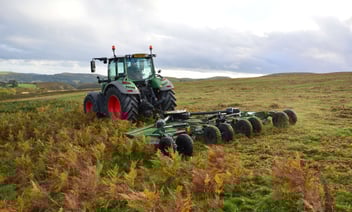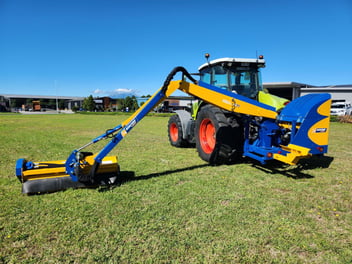

Discover the Spearhead range
Spearhead Machinery has the equipment to lighten your workload, whether you require the versatility ...
Read more.jpg)
Maintaining hedgerows and roadside vegetation requires the right equipment. The cutting head is the key element of any vegetation management equipment. Whether you’re tackling shelterbelts, gorse, dense hedges, overgrown verges, or roadside mowing, the choice of head determines efficiency, finish, and durability.
In this article, we’ll explore the four main types of heads — Flailheads, Rotary Mulchers, Sawblades, and Sickle Bars — and explain how each is best suited to different types of vegetation.
Flailheads are the most common choice for hedgecutting and verge maintenance. They use a series of swinging flails mounted on a rotor or drum, delivering a clean cut while mulching the material. Interchangeable flail types allow the same head to be used on vegetation ranging from grass to 100mm branches. Their versatility makes them ideal for general hedge maintenance, roadside mowing and even land clearing where there is lighter brush or foliage.
These heads excel at leaving a tidy finish because they shred material into smaller pieces, making disposal easier and regrowth more manageable. For contractors and councils, flailheads remain the go-to option for routine hedgecutting and verge control.
They often include adjustable hoods to prevent material from being flung from the mulcher, skids and rollers, which help maintain some clearance between the flails & the ground for roadside mowing, to prevent “scalping”.
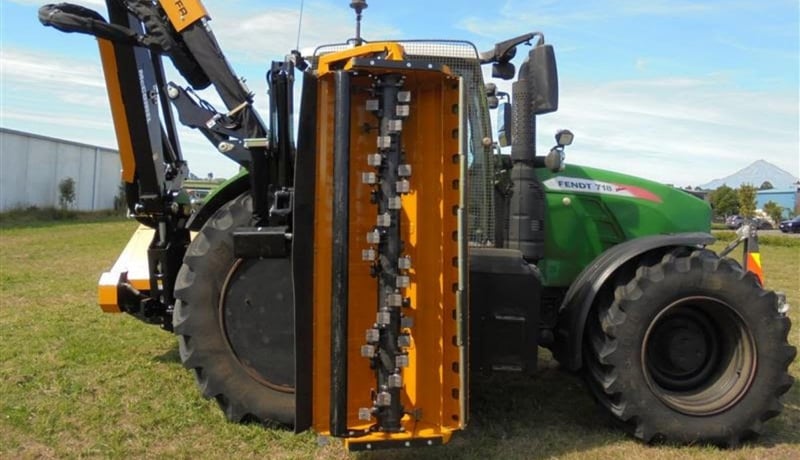
Rotary mulching heads, such as the Major MJ39, Bomford rotary head, and McConnel HD Rotary Head, are designed for tougher hedgecutting and roadside mowing tasks. Unlike flailheads, rotary mulching heads use blades or chains that rotate at high speed, cutting and mulching heavy material in one pass.
Key benefits include:
Rotary mulching heads generally produce a coarser mulch than flailheads. Their strength lies in handling heavier workloads quickly and economically. For operators dealing with heavy roadside growth or neglected hedgerows, rotary mulchers provide unmatched cutting power with lower running costs. The Major Mj39 rotary mulching head has an adjustable hood & roller, making it an excellent option for roadside mowing.

.jpg?width=1200&height=600&name=2511%20Blog%20HedgeCutter%20(1).jpg)
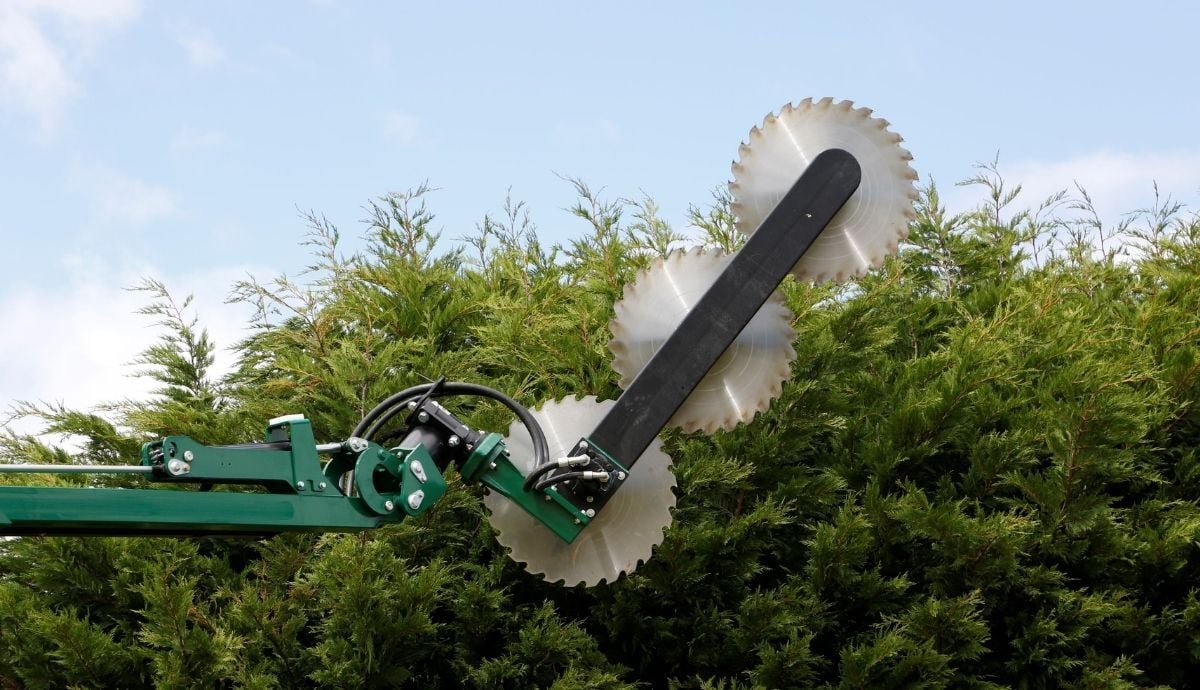
Sawblade heads are specialised tools for shelterbelt trimming and knocking back out-of-control hedge growth. Using circular saw discs, they slice cleanly through branches and woody stems that flails or mulchers cannot manage.
Sawblades are ideal for rejuvenating hedges, cutting back overgrown trees, or tackling heavy vegetation. While they don’t mulch material, they deliver a sharp, controlled cut that promotes healthy regrowth. For arborists or contractors needing accuracy in hedge management, sawblades are the perfect choice when hedge cutting transitions into tree and branch clearance.
The other benefit of Sawblades is that they have the thickest branch capacity and the widest cut of any attachment option. The downside of sawblades is the lack of skids, rollers, or hoods – making them impractical for roadside mowing applications & meaning debris can be flung around.
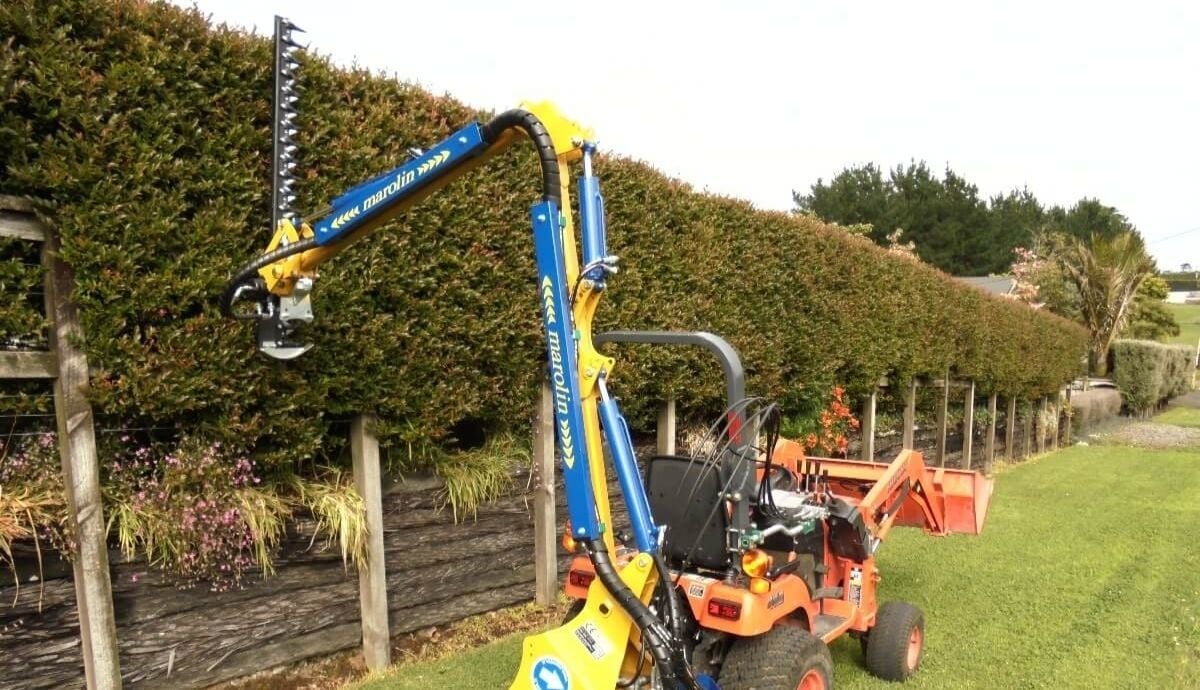
Sickle bar heads use reciprocating knives to shear vegetation, much like a giant hand-held hedge trimmer. They are best suited for hedgecutting where a neat, scissor-like finish is desired. Unlike flailheads or mulchers, sickle bars don’t shred material, which makes them ideal for hedges that need a clean appearance or for roadside mowing where debris control is important.
They are less effective on very dense or woody growth, but for lighter hedges, sickle bars provide an efficient, low-power solution and are the lightest of all attachment options for smaller carrier vehicles. Sickle bars are another head that don’t have floats. Because of the way they work, hoods are rather irrelevant too.
|
Head type |
Cutting thickness/capacity |
Complexity/maintenance |
Weight range |
Width options |
Other useful information |
|
Flailheads |
Light to Heavy vegetation |
High complexity – many moving parts, regular maintenance needed |
Medium |
0.75–2.0 m |
Very versatile; leaves a tidy mulched finish |
|
Rotary Mulchers |
Heavy vegetation, thick brambles, woody growth |
Low complexity – fewer moving parts, reduced wear and servicing |
Heavy |
1.5–2.2 m |
Strong build; handles dense growth quickly; less maintenance |
|
Sawblades |
Thick branches, woody stems (3–5 year regrowth, shelterbelts) |
Moderate complexity – fewer parts than flails, but blades need sharpening/replacement |
Light–Medium (170–250 kg) |
1.2-3.0 m |
Precision cutting; promotes healthy regrowth; not for mulching |
|
Sickle Bars |
Light-medium hedges, light vegetation |
Very low complexity – simple reciprocating blades, minimal power and servicing |
Light |
1.2–2.7 m |
Clean scissor-like cut; ideal for neat hedge appearance |
Choosing the right head for your vegetation management is essential for effective hedgecutting and roadside mowing.
By matching the head to the vegetation type and desired finish, operators can maximise efficiency, extend equipment life, and achieve professional results across hedgerows and roadside environments.
If you're managing hedgerows and shelter belts with thick growth, a rotary mulching hedge cutter will save you time and hassle. If you're keeping verges and ditches tidy, a reach mower with a flail head makes more sense.